Everything You Need to Know About Surf Wax: The Complete Guide
Wax is perhaps the smallest purchase a surfer makes—yet one of the most important. Without it, there's no grip, no adhesion, and sessions spent sliding off your board in every direction. Good news: choosing the right wax is simple. You just need to know two or three basic rules.
What is wax used for?
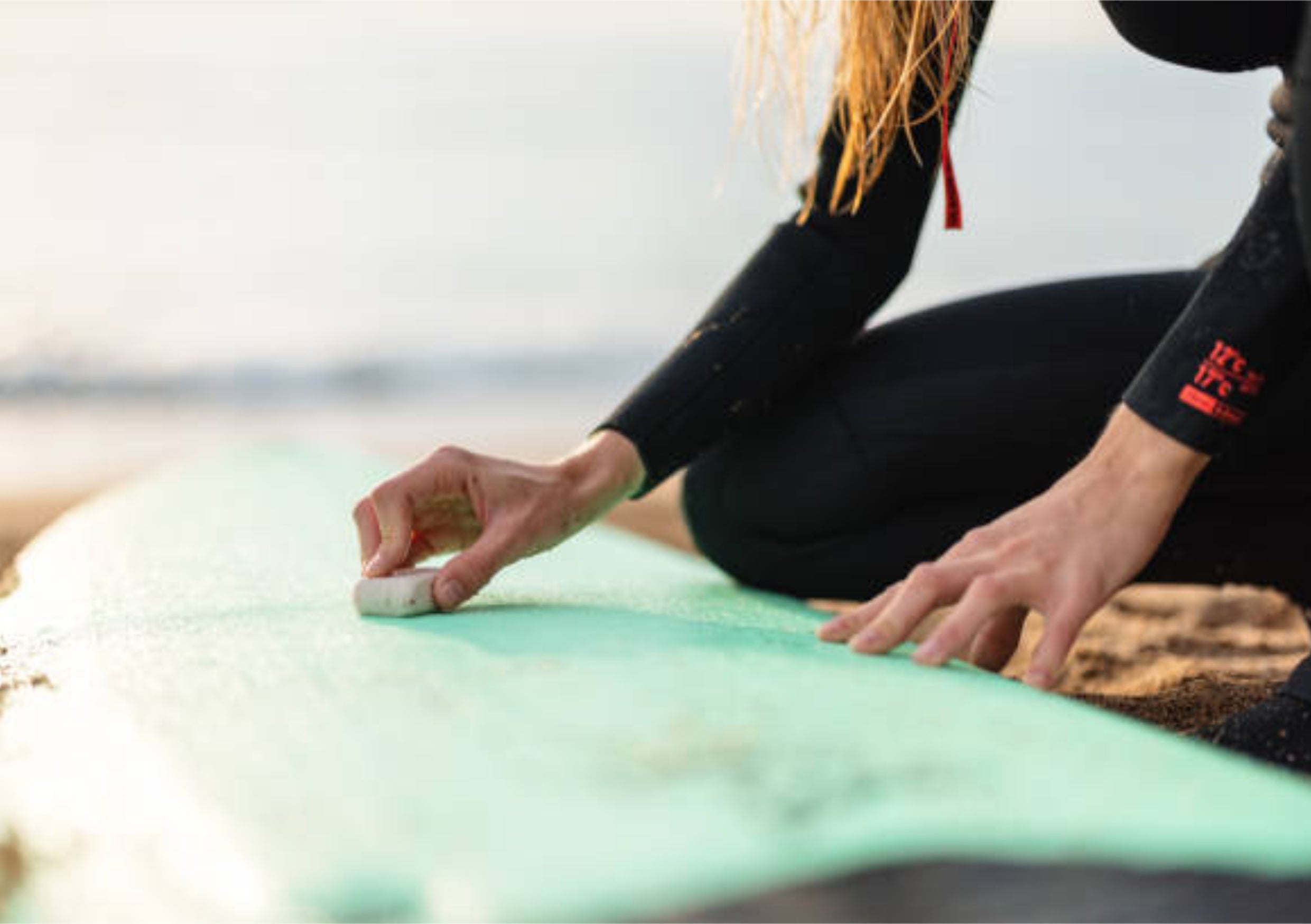
Wax is applied to the deck of the board (the side you stand on) to create grip between your feet and your board. Without it, sliding on the board and standing up in the waves is practically impossible.

Different Types of Wax: Temperature Above All
This is the number one criterion for choosing the right wax. Wax comes in 4 temperatures, each adapted to the water temperature you're surfing in. The rule is simple: the colder the water, the softer and stickier the wax should be. The warmer the water, the harder it needs to be to prevent it from melting in the sun or in overly warm water.
| TYPE | WATER TEMPERATURE | SEASON |
|---|---|---|
| Cold | Below 15°C | Winter · Autumn |
| Cool | 14°C to 21°C | Spring · Autumn |
| Warm | 19°C to 25°C | Summer |
| Tropical | Above 24°C | Surf trips (Indonesia, Caribbean...) |
Organic and Natural Wax
For surfers who are mindful of their environmental impact, Matunas wax and Stay Covered, made from 100% natural and organic ingredients, are non-toxic to the ocean; they are among the few waxes on the market that combine true performance with respect for the ocean.
Because every session in the water inevitably leaves a bit of wax in nature, choosing a biodegradable wax is a simple but concrete action to surf in line with your values.

Basecoat Wax: The Foundation for Good Grip
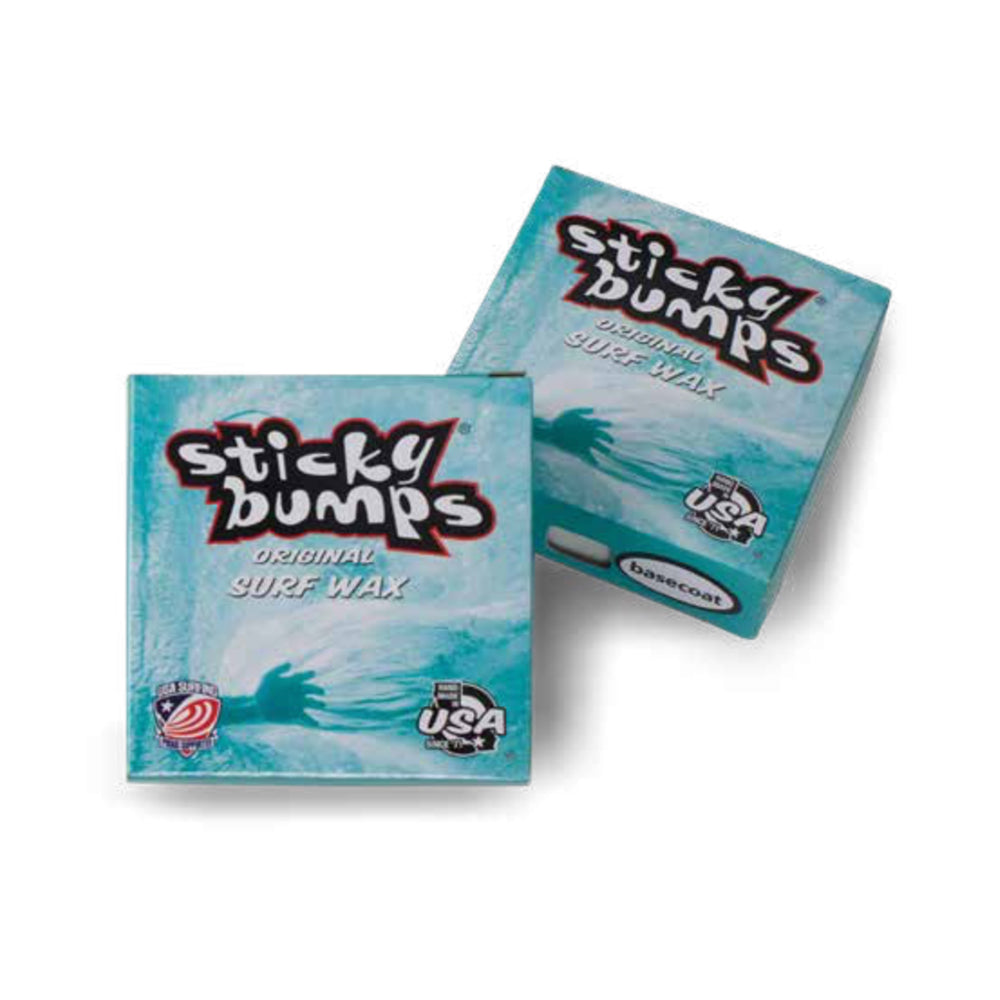
Before applying your temperature wax, it is highly recommended to apply a layer of basecoat to your new or freshly de-waxed board. Basecoat is a very hard wax—similar to Tropical—that is applied as the very first layer directly onto the bare deck of the board.
- Its role: To create a solid and durable foundation to which your temperature wax will adhere better, form nice regular bumps, and last much longer. Without basecoat, wax wears out faster, bumps are less defined, and you end up re-waxing more often.
How to Wax Your Board?
Waxing your board correctly can be learned in two minutes and it really improves the quality of the grip during a session.
Wax should only be applied to the deck of the board, the side you stand on. Never on the rails or the bottom, as this would unnecessarily slow down your glide.
The area to wax depends on your board type. On a shortboard or mid-length, there's no need to go all the way to the nose; focus on the back area where you actually place your feet. On a longboard, however, it's better to wax the entire length: longboarders walk up to the nose of the board.

A simple rule to remember: don't leave any area unwaxed. That's invariably where you'll step at the wrong moment and miss the wave of the session.
Should you wax a foam board?
The short answer: not necessarily.
Foam boards (soft-tops) often have a textured foam that already provides enough natural grip for surfing. In this case, wax is not essential, and you can surf perfectly well without it.
That said, some surfers still prefer to add a thin layer of wax for a more precise grip. It's a matter of personal preference; there's no right or wrong answer.

However, some foam boards come with an integrated non-slip deck that makes wax truly unnecessary. This is the case, for example, with Almond R-Series, whose textured deck offers excellent grip. On this type of board, there's no need to get your wax out!
Removing Wax from Your Board
Over time, wax accumulates and gets dirty, losing its effectiveness. It's advisable to remove it completely every few months or as soon as you feel your grip is no longer sufficient.
- The method: Leave your board in the sun for a few minutes, or run some warm water over the deck. Heat softens the wax and makes it much easier to scrape off. Then, use a wax comb to neatly scrape the entire surface. Finish with a clean cloth to remove any remaining residue.
- The essential accessory for this step: the wax comb. With its serrated edge, it efficiently removes old wax without scratching your board. A simple, inexpensive tool to always have in your bag.